
“Voice of the Sea・Hearing Jiali” Public Art Conch-Shaped Restroom
A conch-inspired landmark created through large-scale cement 3D printing, combining public art with practical functionality.
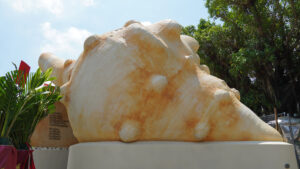
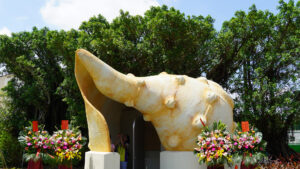
Public Art That Can Be Seen—and Truly Used
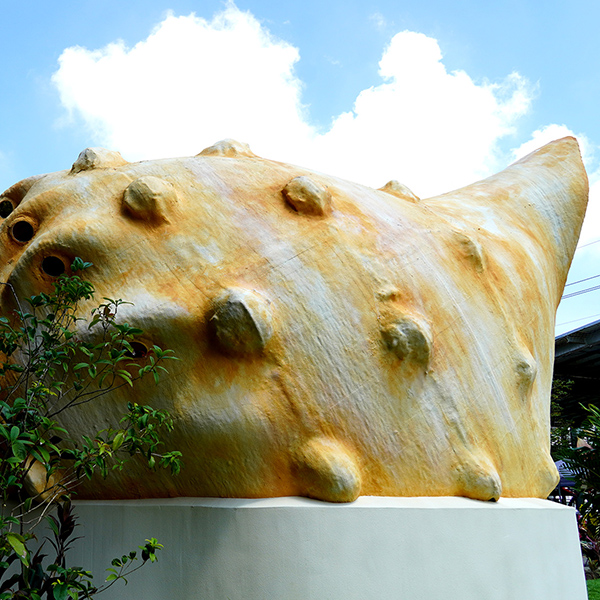
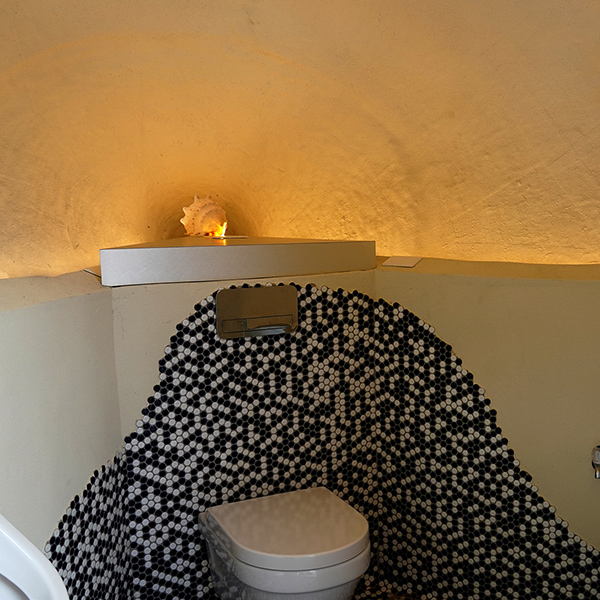
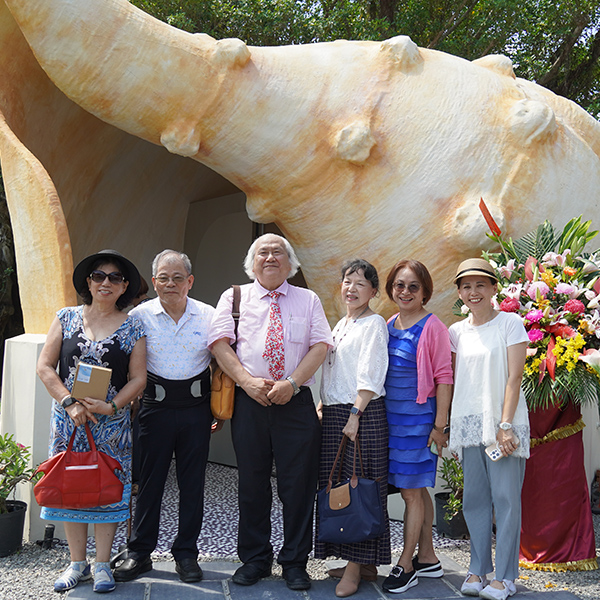
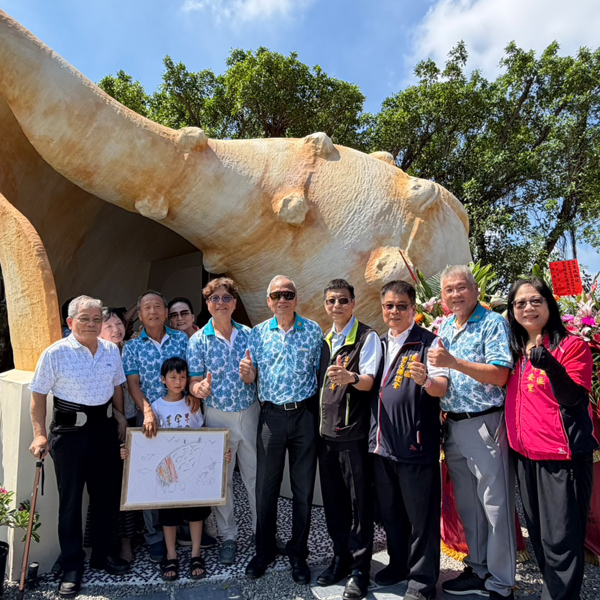
From a distance, 「The Sound of the Sea・Hear Jiali 」resembles a giant seashell within the urban landscape. A closer look reveals that it is more than a work of public art—it is also a fully functional public restroom equipped with complete sanitary facilities.
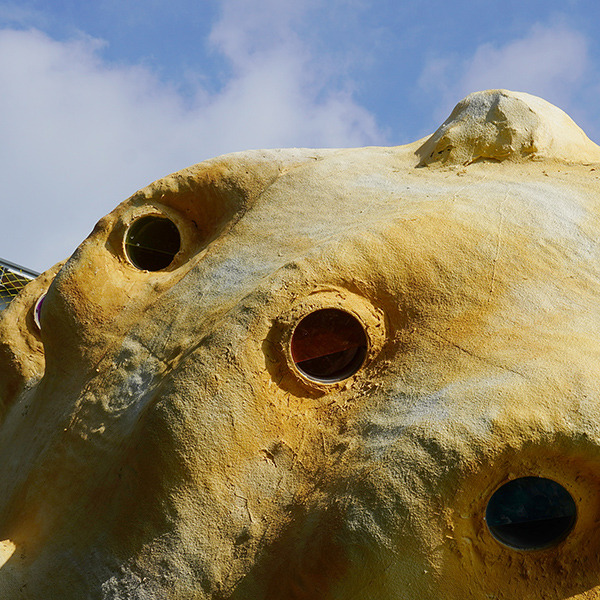
The design transforms the natural forms of seashells and freshwater snails into an architectural structure. Its shell-like contours, flowing transitions, and substantial curved surfaces reflect the local environment and cultural identity of Jiali.
Public facilities no longer need to be conventional, box-shaped functional spaces. They can become part of the local landscape—a place residents pass by and use every day, while also inviting people to pause, observe, and appreciate.
Why Was Cement 3D Printing Chosen for This Project?
The seashell-inspired design features numerous nonlinear curves, three-dimensional transitions, and irregular volumes. Using conventional formwork alone would typically require complex molds and additional construction processes to achieve these variations.
Cement 3D printing allows printing paths to be generated directly from a digital model, transforming parametric design layer by layer into a large-scale physical structure. This makes the technology particularly suitable for architectural and landscape projects with free-form surfaces and customized geometries.
For this project, large-scale cement 3D printing was used to create the main form of the seashell structure, bringing the curves, surface variations, and spatial volumes of the digital design into the built environment.
From a Digital Model to a Large-Scale Cement Structure
1. Form Development and Digital Model Integration
The design team first transformed the natural curves of seashells and freshwater snails into a constructible digital model. The model also incorporated practical considerations, including the interior space, entrance and exit, structural thickness, and the subsequent installation of equipment.
2. Printing Path and Equipment Parameter programming
Based on the model geometry, component dimensions, and material properties, Everplast carried out model slicing and printing path programming. Key parameters—including material extrusion rate, printing speed, layer height, and cornering paths—were carefully adjusted to ensure stable and accurate printing.
3. Large-Scale Cement 3D Printing
The project was produced using a 3-metre cement 3D printer developed and manufactured by Everplast Machinery. The cement material was deposited layer by layer along the programmed printing path, gradually forming the contours, thickness, and curved surfaces of the shell structure.
4. On-Site Construction and Functional Integration
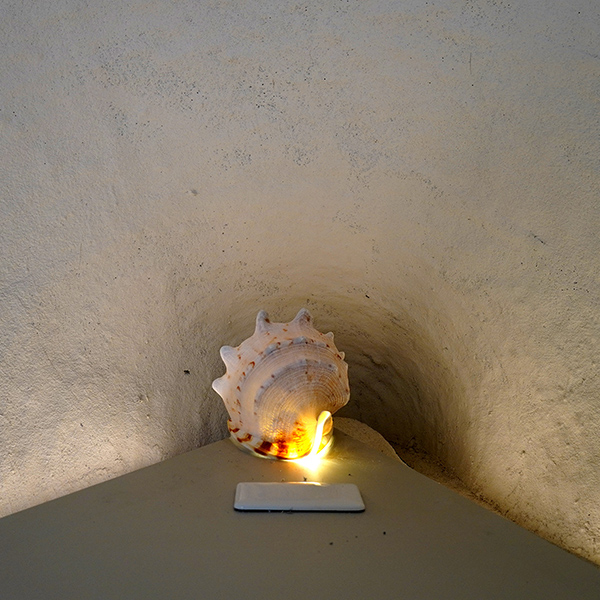
After the printed components were completed, the construction team carried out assembly, surface finishing, mechanical and electrical installation, and the fitting of sanitary equipment. This process fully integrated the public artwork’s sculptural form with the practical functions of a public restroom.
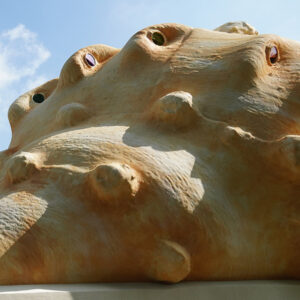
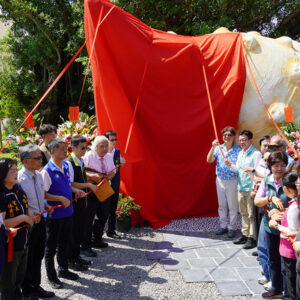
Key Technical Challenges of the Project
Large-Scale Irregular Curved Surfaces
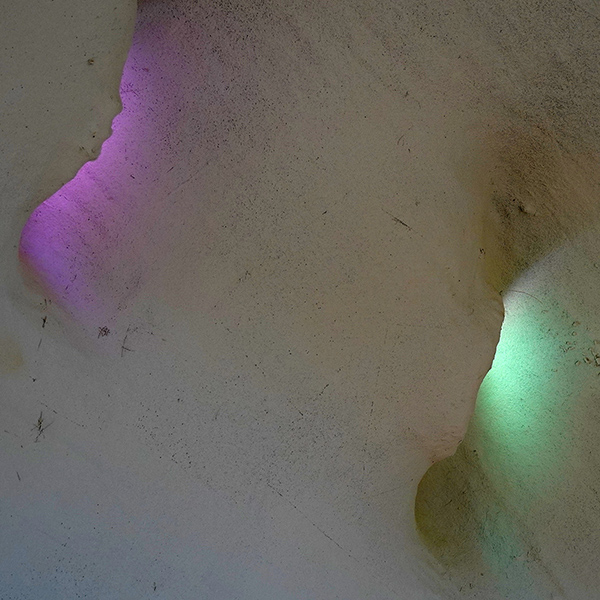
The seashell form is not based on a single arc. It consists of multiple rising and falling contours, concave and convex transitions, and tapered curved surfaces. During printing, the material output and machine movement had to be precisely coordinated to maintain continuity across every printed layer.
Integrating Artistic Form with Practical Function
The exterior needed to present a complete seashell-inspired appearance, while the interior had to accommodate a fully functional restroom. Therefore, the digital model had to address not only the visual design but also engineering requirements such as interior dimensions, entrances, exits, equipment, and utility routing.
Coordinating Printing, Transportation, and On-Site Construction
Large-scale 3D printing projects involve multiple stages, including design, manufacturing, transportation, assembly, and on-site construction. During the early planning stage, the teams needed to determine how the structure would be divided, where the joints would be positioned, and in what sequence the components would be installed. This coordination was essential for successfully transforming the digital model into the completed structure.
What Value Does Cement 3D Printing Bring to Public Spaces?
Enhancing the Identity of Public Facilities
Through customized forms, even a public restroom can become a distinctive work of public art and a local landmark.
Enabling Free-Form Surface Design
Cement 3D printing can accommodate complex curves, gradually changing volumes, and non-standard geometries. This gives architects and designers greater freedom beyond the limitations of conventional standardized components.
Integrating Art with Practical Function
This project is not simply a display sculpture. It is a fully operational public facility, demonstrating how cement 3D printing can progress from sculptural fabrication to practical applications within the built environment.
Supporting Large-Scale Custom Fabrication
By combining digital models with large-scale printing equipment, the form can be adapted to different locations, dimensions, and design requirements. The technology is suitable for landscape installations, public art, feature walls, public seating, and architectural components.
Q&A
What Is “The Sound of the Sea・Hear Jiali”?
The Sound of the Sea・Hear Jiali is a seashell-shaped public artwork located in Jiali, Tainan. It also functions as a fully usable public restroom, combining artistic expression with public service.
Source: Liberty Times
Where Is the Seashell-Shaped Public Restroom Located?
The structure is located at the basketball court beside the Jiali Fire Station in Tainan City.
Who Donated and Designed the Seashell-Shaped Public Restroom?
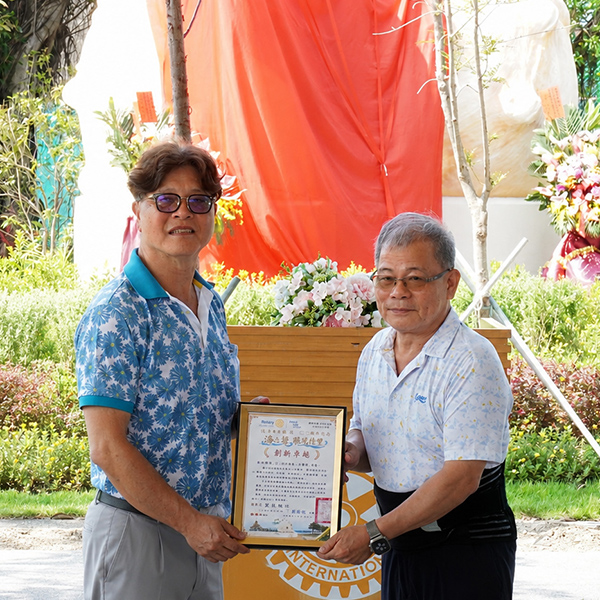
The project was donated by the Rotary Club of Jiali to commemorate its 40th anniversary. It was designed by architect Tsai Yi-Chang, with construction support provided by Yun Cheng Construction Co., Ltd.
How Was the Seashell Form Manufactured?
The large-scale structure was produced using a 3-metre cement 3D printer developed and manufactured by Everplast Machinery. Based on the digital model, Everplast carried out model slicing, printing-path programming, and large-scale cement 3D printing. The project was then completed through on-site assembly and subsequent construction work.
What Types of Public Projects Are Suitable for Cement 3D Printing?
Cement 3D printing is suitable for applications in public art, landscape seating, decorative planters, feature walls, leisure facilities, portable building, architectural components, and other public space projects with free-form surfaces or customization requirements.
What Services Does Everplast Provide?
Everplast provides large-scale cement and plastic-pellet 3D printing services, including design-for-manufacturability evaluation, model slicing and printing-path programming, material and parameter testing, large-scale cement 3D printing, and project fabrication support.