
Li-Wu | Building a Walk-In Landscape with Large-Scale Concrete 3D Printing
Li-Wu is a large-scale work positioned between architecture, landscape, and spatial installation. Through its large-scale concrete 3D printing service, Everplast transformed the free-form surfaces of a digital model into physical components, layer by layer. Lines that once existed only on a screen became a real space that people could enter, touch, and experience.
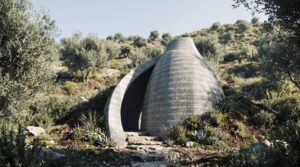
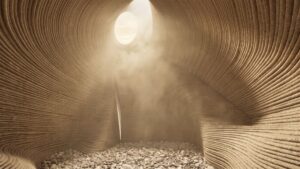
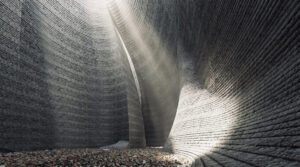
The Spatial Form of Li-Wu
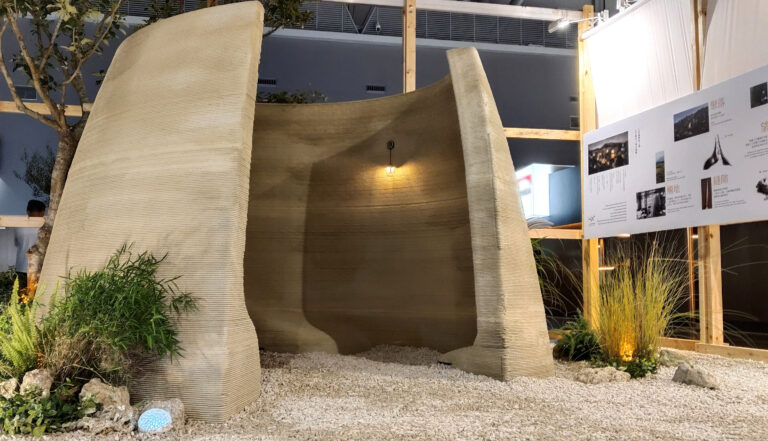
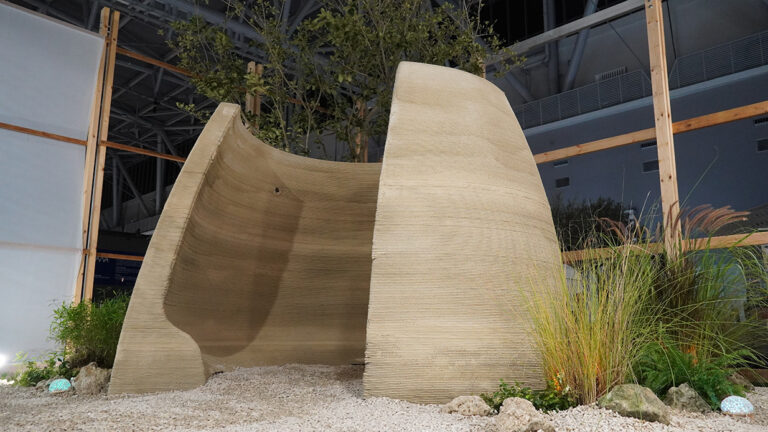
It resembles a dwelling, yet there is no clearly defined boundary between inside and outside.
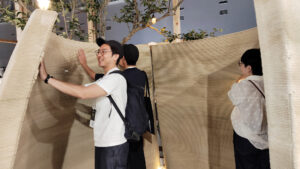
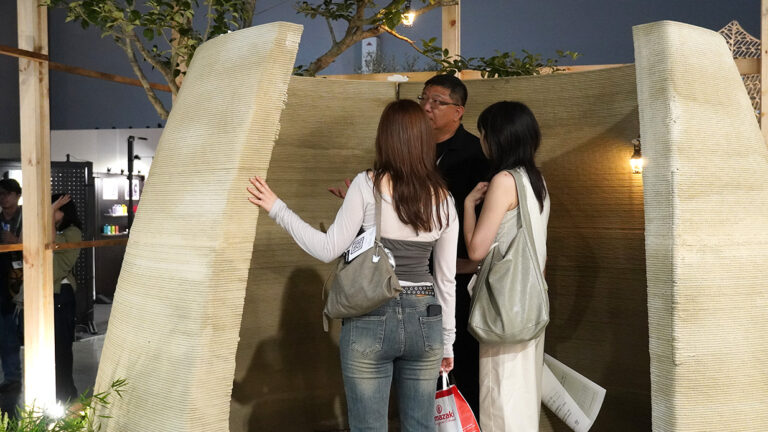
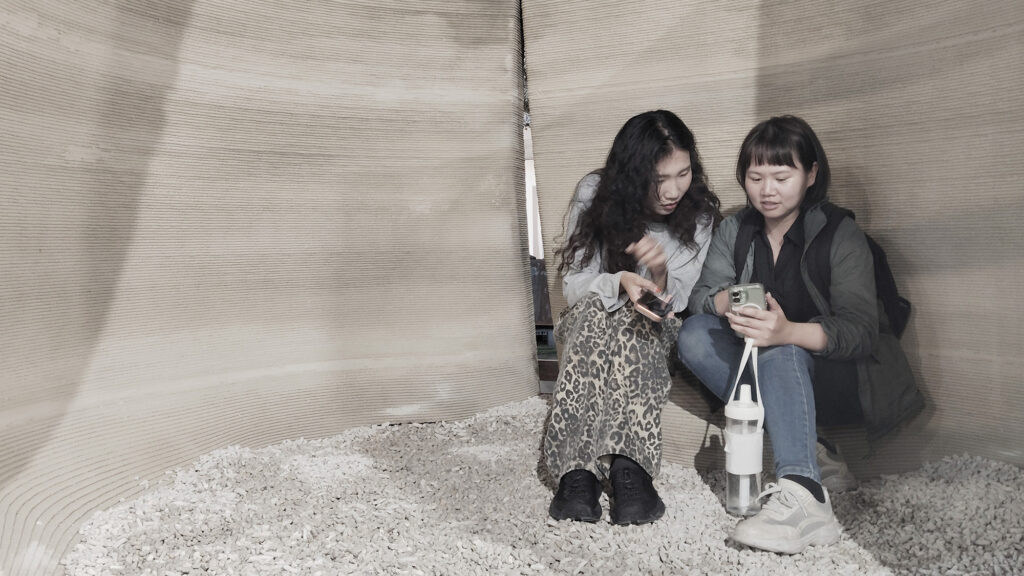
Curved surfaces rise gradually from the ground. Their layered textures resemble accumulated soil or traces left by a landscape shifting over time. As visitors move between the walls and openings, the space changes with their perspective, the light, and the rhythm of their footsteps.
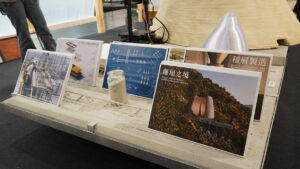
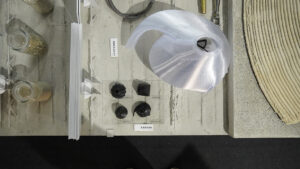
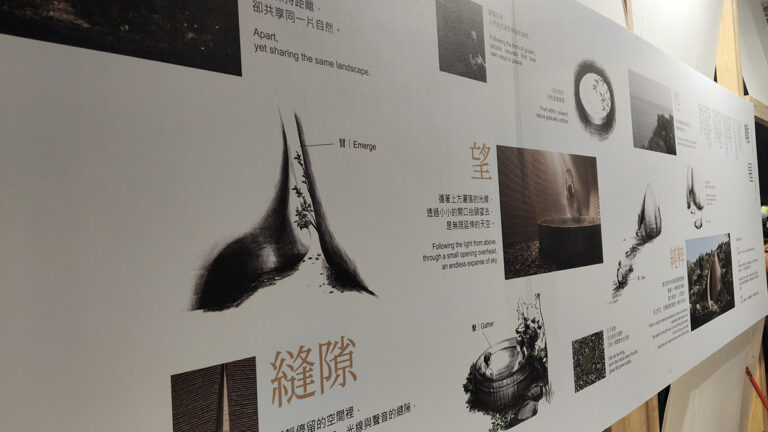
Li-Wu was constructed through the concepts of “earthen material layering” and “spiral interweaving,” allowing the material to extend beyond individual components and form a complete spatial environment. Created through a cross-disciplinary collaboration by the Fab-X team, the work combines low-carbon precasting, 3D printing, and mineral coatings to create an immersive space that visitors can physically enter.
From Digital Surfaces to a Walk-In Structure
Using large-scale cement 3D printing equipment, Everplast continuously extruded material along paths generated from the digital model, building the structure upward one layer at a time.
Working with the large dimensions, continuous curves, and spiral geometry of “Li-Wu” involved more than simply enlarging a digital model. The printing paths and fabrication methods had to be adjusted according to the form, material behaviour, and actual forming conditions.
Through layer-by-layer deposition, abstract digital lines gradually became physical surfaces that surround the body, guide movement, and interact with light and shadow.
The Advantages of Large-Scale cement 3D Printing
Large-scale cement 3D printing is particularly suitable for non-standard, continuously changing free-form surfaces that are difficult to produce using conventional moulds.
The material can be formed directly along a digital toolpath, reducing the need for large quantities of custom formwork for complex geometries. This also creates a more direct connection between digital design and physical fabrication.
When the curves of the digital model are modified, the manufacturing paths can be adjusted accordingly. This makes large-scale, low-volume, and highly customised forms more practical to produce.
Layered Textures Across the Surface of Li-Wu
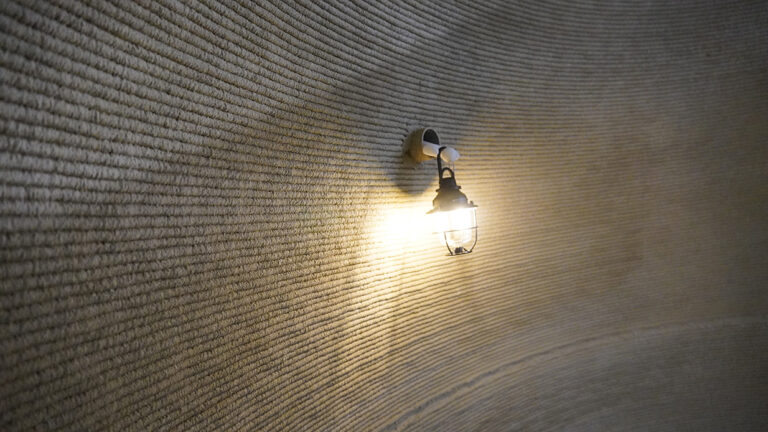
The horizontal textures created through layer-by-layer deposition were not completely concealed. Instead, they became an integral part of the surface of Li-Wu.
Viewed up close, the surface reveals traces of the material moving, turning, and accumulating along the printing path. From a distance, these individual layers come together to form continuous surfaces with a clear sense of direction.
Here, 3D printing is more than a fabrication tool. It also becomes a means of expressing material, time, and the process of construction.
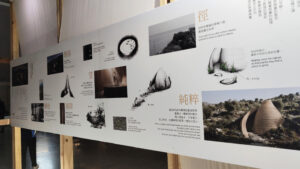
Spatial Applications of Large-Scale Cement 3D Printing
Large-scale cement 3D printing can be applied to public art, landscape features, exhibition installations, free-form walls, large furniture, and customised spatial components.
For designs involving irregular curves, limited production quantities, or large dimensions, 3D printing can help architects, designers, and artists transform digital concepts into physical works that can be viewed, used, and experienced.
Li-Wu represents more than a large-scale 3D printed object. It demonstrates how design, materials, and digital fabrication can work together to shape an entire space.
Q&A
What is the concept behind the "Li-Wu" Project?
The Li-Wu Project explores the relationship between architecture, landscape, and human experience. Through earthen material layering and spiral interweaving, Fab-X transforms a single material into an immersive space where visitors can step away from daily life, reconnect with themselves, and experience architecture through movement, touch, and perception.
▶ source: Economic Daily News
What fabrication technologies were used to create "Li-Wu"?
Li-Wu combines low-carbon precasting, large-scale 3D printing, and mineral coating techniques. Earthen material layering and spiral interweaving were used to form a large-scale space that visitors can physically enter.
What role did Fab-X play in Li-Wu?
Fab-X Taiwan System Casting is a cross-disciplinary collaboration platform that integrates material development, design thinking, industrial fabrication, and engineering practice. Li-Wu was jointly created by the Fab-X team, combining low-carbon precasting, large-scale 3D printing, and mineral coating technologies to transform expertise from different fields into an immersive spatial work that visitors can physically enter.
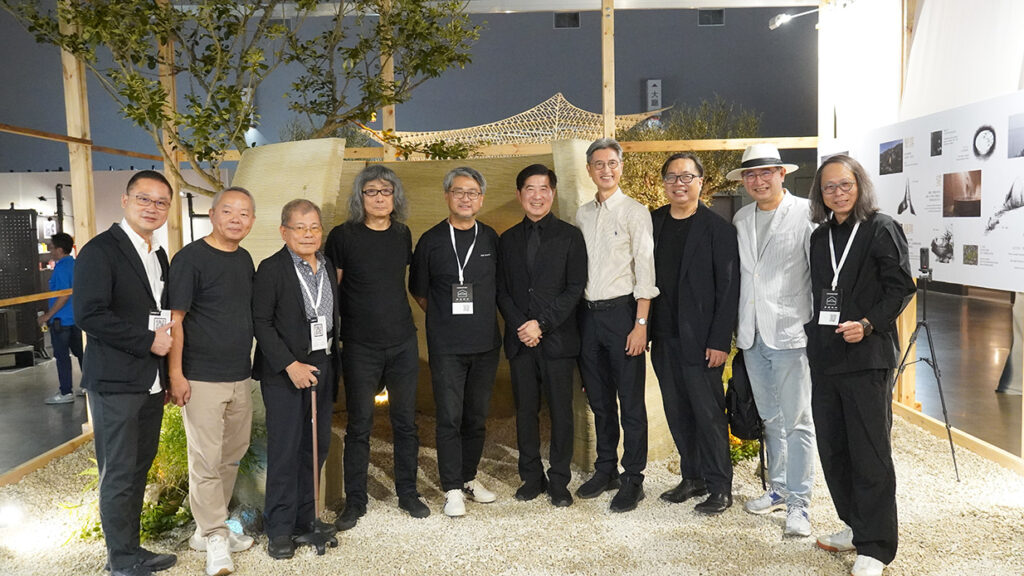
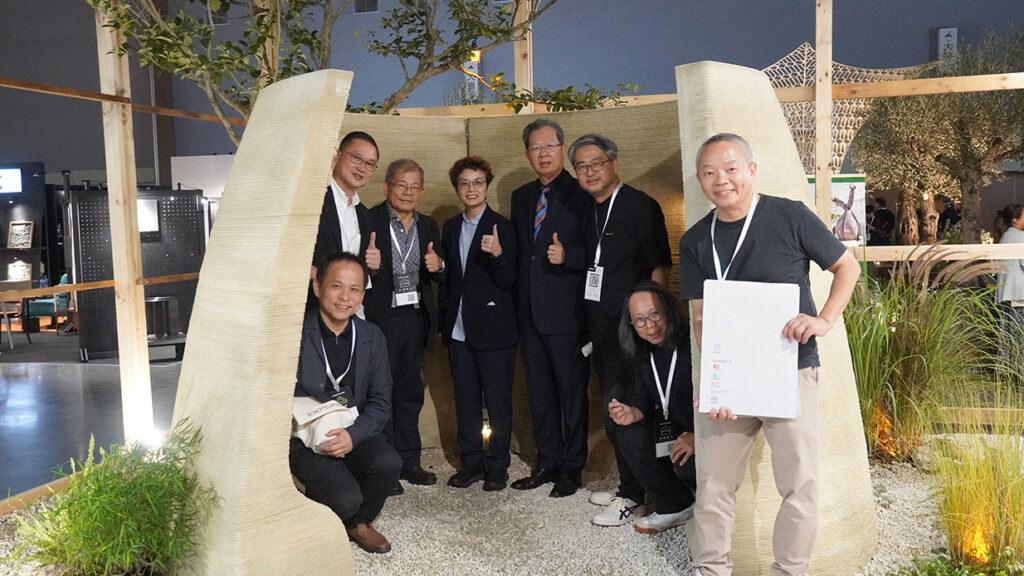
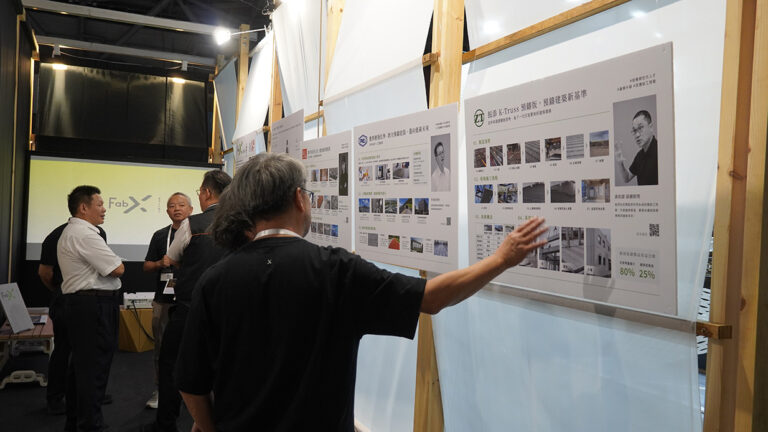
Fab-X brings together professionals from architecture, materials, manufacturing, and engineering to explore new possibilities in architectural production through cross-disciplinary collaboration. Dr. Wen-Yi Kuo, founder of Lotos, was also present to personally introduce the concept and explain the work to exhibition visitors.
▶ Excerpted from I Interior Design Circle
Does Everplast provide large-scale concrete 3D printing services?
Yes. Everplast can evaluate suitable large-scale cement 3D printing methods based on the digital model, finished dimensions, material, geometry, and intended installation environment.
What types of forms are suitable for large-scale 3D printing?
Continuous curves, irregular walls, spiral geometries, graduated forms, and customised designs that are difficult to produce using conventional moulds are all suitable for further evaluation using large-scale 3D printing.
What information is required for a 3D printing service enquiry?
We recommend providing a 3D model or design drawings, the intended dimensions, quantity, material requirements, installation environment, and expected completion date. This information allows Everplast to assess the appropriate printing and forming method. –>Contact Us